

The Art of the Strategic No: How to Turn Rejection into Your Fundraising Roadmap
Rejection isn't the end of the conversation, it's the beginning of the real one.

Hi, Clay here, welcome to Inpaceline Weekly, a tactical briefing for founders building high-growth companies and preparing to raise capital with confidence. Every Wednesday, I share practical insights, investor-ready frameworks, and proven tools to help you clarify your story, sharpen your strategy, and accelerate your path to funding and scale. It’s all about turning vision into traction faster, cleaner, and with less guesswork.
This week, we're breaking down how to handle investor rejection and turn every "no" into a clear, actionable roadmap to funding. I've also included the full templates from my Investor Playbook to help you put it into practice.
Here’s what you’ll learn in the next 3 minutes:
The one question that cuts through vague feedback and forces investors to give you a specific, measurable milestone for a future "yes."
How to use the "If-Then" framework to turn that milestone into a verbal contract and a clear roadmap in your CRM.
The copy-and-paste monthly update template for keeping investors warm and proving you're making consistent progress toward their target.

From Vague to Actionable: Pinning Down the Real Objection
Investors often give polite, vague reasons for passing: "You're a bit too early for us" or "It's not quite a fit right now". Your job is to cut through the politeness and get to the real, measurable reason.
Don't let them off the hook. Ask the simple, direct question that changes everything:
"I appreciate the feedback. So that I can learn from this, what is the single biggest milestone we could hit that would make this a 'yes' for you?"
This question does three powerful things:
It shows you're coachable, not defensive.
It forces them to be specific. "Too early" becomes "get to $10k in MRR." "Not a fit" becomes "prove you can sign two enterprise clients."
It opens the door for a future conversation. You now have their permission to follow up when you hit that exact goal.
The "If-Then" Framework: Turning Rejection Into a Roadmap
Once you have that milestone, it's gold. But it's worthless if you forget it. This is where a simple system becomes your superpower. In our Investor Playbook, we call it the "If-Then, Then-What" framework.
It's a column in your investor CRM where you document the promise.
IF we file our patents...
IF we onboard 500 active users...
IF we reduce churn below 4%...
THEN [Investor's Name] will invest [Amount].
This isn't just a note. It's a verbal contract. I had an investor tell me, "I'm not going to invest in you until you file your patents." That was a clear target. We went out, got it done, and I went back to him. Not only did he invest, but he was so impressed by the execution that he committed to a larger, milestone-based investment of $200,000.
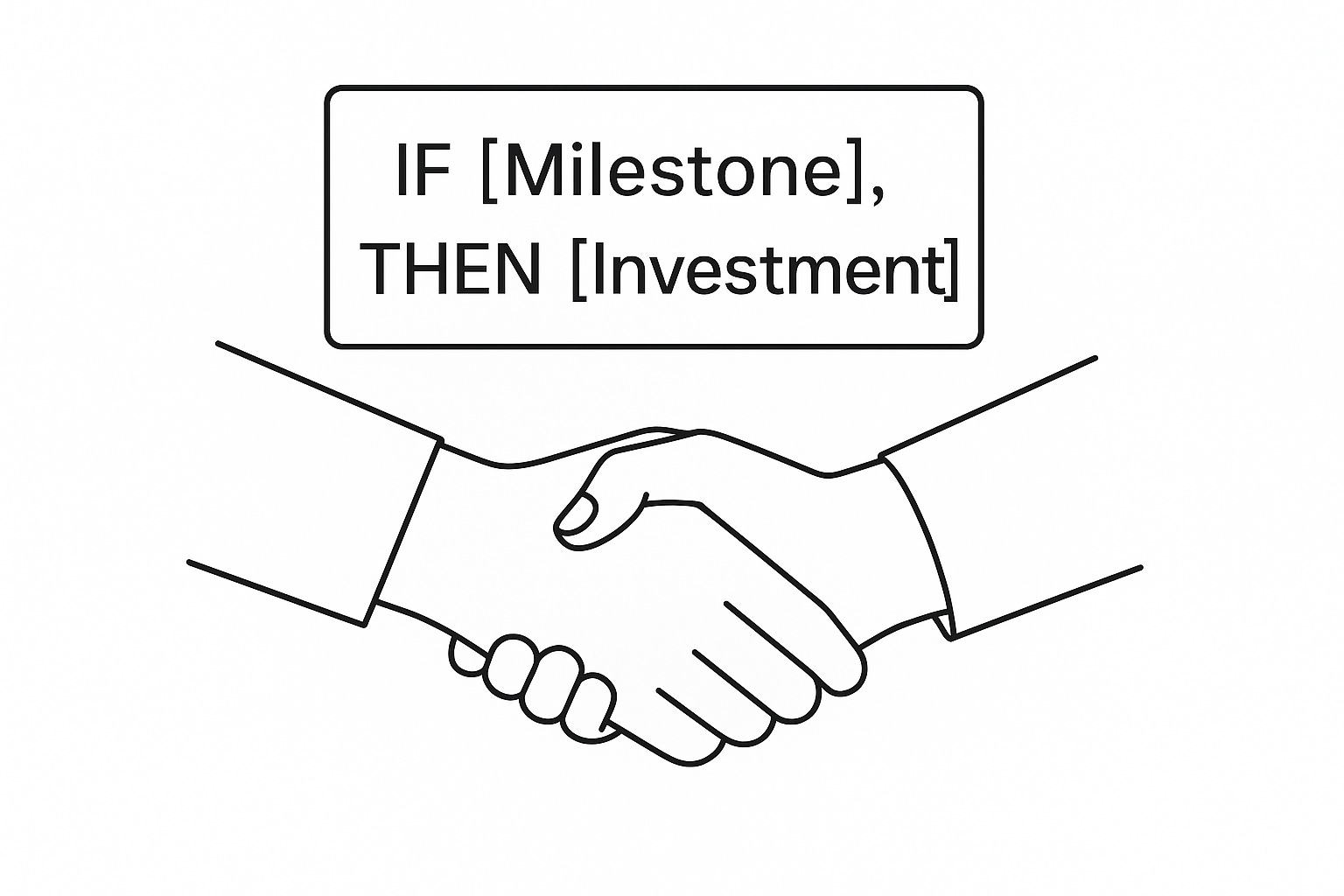
Your Task: For every "no" you get, push for a specific milestone. Immediately open your CRM and document it in an "If-Then" format.
Keeping Investors Warm: The Monthly Update
Getting the milestone is one thing, but the journey to get there is just as important. You need to show investors that you are making steady, predictable progress.
This is where the monthly update comes in. It’s not spam. It's the proof that you’re consistently chopping wood. It builds trust, shows resiliency, and keeps your company top-of-mind, so when you do hit that milestone, they’re already primed to say yes.
Here is the exact template you can use. Send it on the same day every month (e.g., the 3rd) to show consistency.
[COPY & PASTE EMAIL TEMPLATE]
Subject: [Your Company Name] // July 2025 Update
Hi everyone,
A quick update on our progress at [Your Company Name] for the month of July.
TL;DR:
We hit a new MRR high of [Dollar Amount], growing [X]% month-over-month.
We successfully launched [New Feature Name], which is already being used by [Y]% of our active users.
Our key focus for August is [State your #1 priority for the next month].
KPI Dashboard:
MRR: $[Amount] (+[X]%)
New Customers: [Number]
Customer Acquisition Cost (CAC): $[Amount]
Cash in Bank: $[Amount]
Runway: [Number] months
Highlights & Wins This Month:
Customer Win: We officially onboarded [Big Customer Name], who came to us after leaving [Competitor Name].
Product: We shipped [Key Feature], which addresses [a specific pain point]. Early feedback has been incredible.
Team: We welcomed [New Hire Name] as our new [Job Title]. Her experience at [Previous Company] will be a huge asset.
Challenges & Learnings:
We tested a new marketing channel on LinkedIn that didn't perform as expected. We learned that our audience responds better to [Different approach], so we are reallocating that budget to a more proven channel. It was a cheap lesson in the grand scheme of things.
What's Next:
Our engineering team is now focused on building out our [Next Big Feature], with an expected launch in mid-September.
Our sales focus for August is to land two more customers in the [Specific Industry] vertical.
Thanks for all your support.
Best, [Your Name]
Put It Into Practice
Tracking these promises and sending consistent updates requires a system. You need a simple, reliable way to make sure no opportunity falls through the cracks.
That's why I built the "If-Then, Then-What" column and the Monthly Update Template directly into my Investor Playbook. It’s the same playbook I use with my coaching clients, a living document that I’m constantly updating with new templates, strategies, and resources as the market evolves. It's designed to turn every investor conversation into a trackable data point on your road to funding.
Grab the full, copy-and-paste Free Notion template here:
The Toolkit
Sending your pitch deck out can feel like shouting into the void. You never know who’s reading it, if they’re reading it, or which parts they care about. To fix this, I exclusively use DocSend.
It’s more than a secure way to share a document; it’s an intelligence-gathering tool. DocSend gives you page-by-page analytics on who viewed your deck and for how long. You can see if an investor got stuck on your team slide or skipped your financials entirely.
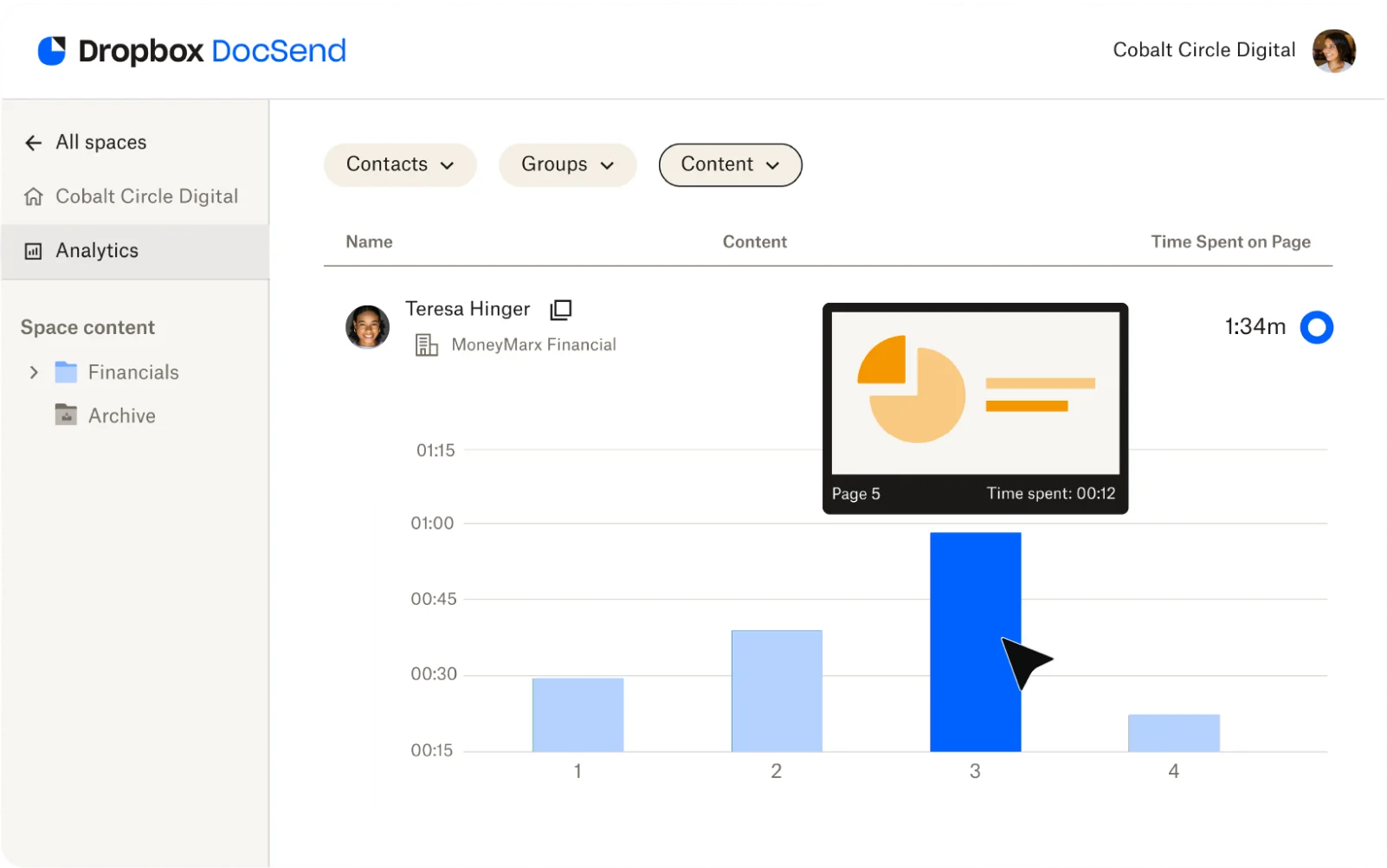
This data is gold. It helps you refine your pitch and tailor your follow-up. Plus, you can update the deck on the backend even after you've sent the link. Never send a pitch deck as a blind attachment again.
In the end, Don't treat rejection as an obstacle; treat it as an objective. Secure the milestone, show your progress, and give investors a compelling reason to bet on your resilience.
Best,
Clay Banks